
Build SEO Silos That Dominate SERPs
Publishing more content is not the same as building more authority. That is where many websites go wrong.
They create blog posts, service pages, guides, and landing pages without a clear structure connecting them. As a result, Google sees a collection of pages instead of a tightly organized topical system. Rankings stall, important pages stay underpowered, and the site struggles to build momentum.
If you want stronger visibility, better internal linking, and clearer topic relevance, you need more than content. You need a structure. That is why smart SEOs build silos.
When you build SEO silos that dominate SERPs, you create a framework that helps users navigate logically while helping search engines understand how your content fits together. Google’s documentation explains that links help Google discover pages and understand relevance, and its SEO Starter Guide emphasizes creating a site that is easy for users to explore.
A strong silo structure does not mean trapping pages in rigid folders or overcomplicating your site. It means organizing content around clear topics, building hub-and-support relationships, and using internal links intentionally.
“Google uses links as a signal when determining the relevancy of pages and to find new pages to crawl.�
What Are SEO Silos?
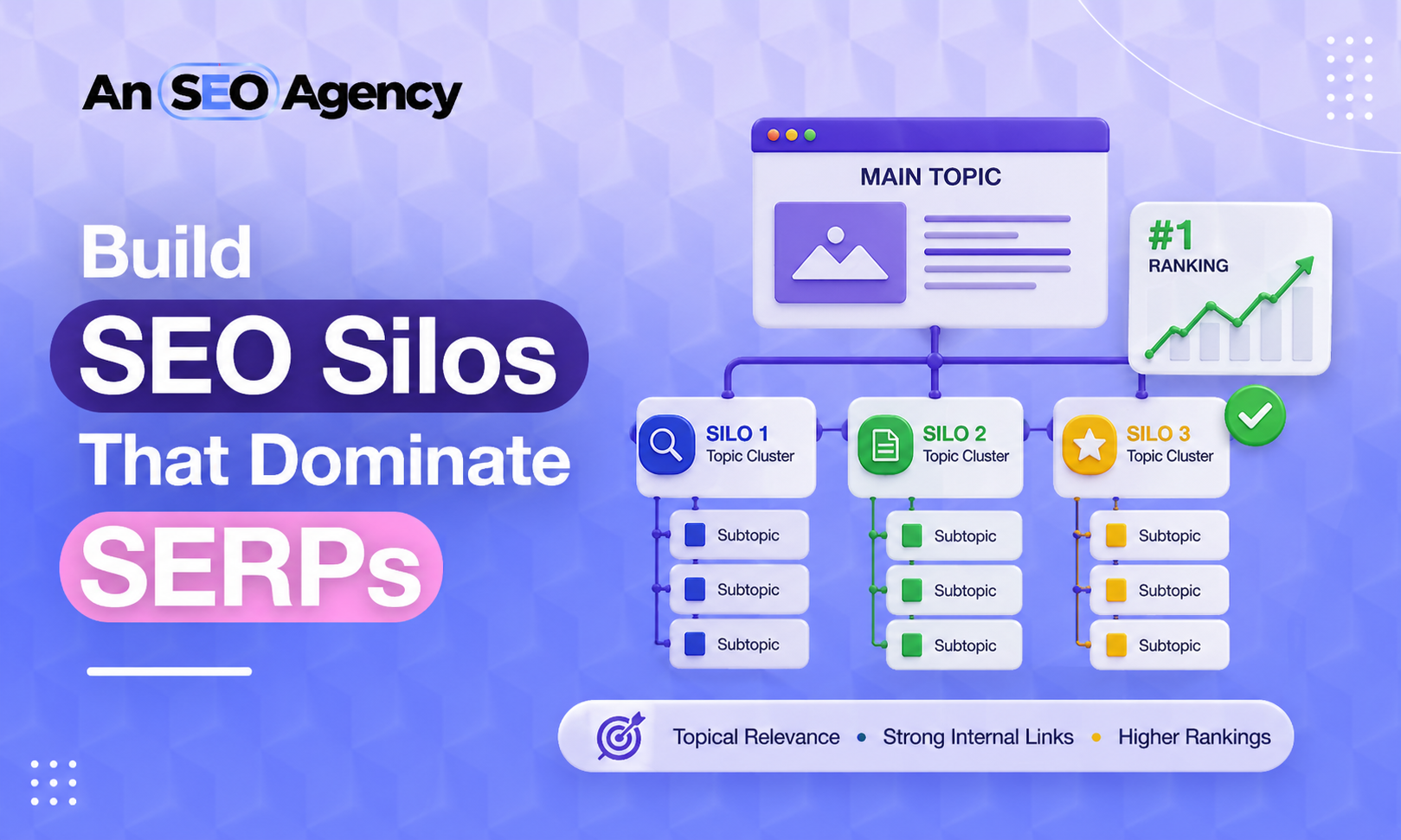
SEO silos are a way of organizing website content into tightly related topic groups so that search engines and users can easily understand subject depth, page hierarchy, and content relationships.
In simple terms, a silo groups content by theme.
For example, if your website focuses on SEO services, you might create separate silos for:
- technical SEO
- on-page SEO
- local SEO
- link building
- content strategy
Inside each silo, you would usually have:
- one primary pillar or hub page
- several supporting pages targeting subtopics
- internal links connecting supporting pages back to the hub
- contextual links across related pages within the same topic
This structure helps reinforce subject relevance. Search Engine Land notes that strong internal linking improves crawlability and topical authority, while site architecture helps search engines understand what your site is about.
Why SEO Silos Matter for Rankings
A silo structure matters because search engines like Google do not evaluate pages in isolation—they interpret how everything connects. When multiple pages around a single subject are linked together in a logical way, they reinforce each other. As a result, you send clearer signals about expertise, depth, and relevance, which makes it easier for search engines to understand what your site truly specializes in.
This idea is also reflected in the Google SEO Starter Guide, which emphasizes building a site that helps users move from general information to more specific content. In other words, broad pages should naturally lead into deeper subtopics. That principle sits at the core of silos, where a clear hierarchy guides both users and search engines through your content.
When implemented well, a strong silo creates multiple benefits. First, it helps build topical authority, because all related content is grouped and interconnected. At the same time, it improves internal link flow, ensuring that authority is distributed efficiently across pages. In addition, it reduces orphan pages, since every piece of content has a defined place within the structure. As a result, pillar pages become stronger, service pages receive more relevant support, and crawl pathways become easier for search engines to follow.
SEO Silos vs Topic Clusters
To begin with, SEO silos refer to a more rigid and structured organizational model. They focus on clear hierarchy, where content is grouped into tightly defined sections. Each silo typically has a parent page and multiple child pages, all connected through intentional internal linking. As a result, silos help search engines understand the boundaries of your content and reinforce topical relevance within a specific category.
On the other hand, topic clusters offer more flexibility. Instead of emphasizing strict hierarchy, they revolve around a central pillar page supported by multiple related articles. These supporting pages link back to the pillar and often to each other, creating a web of connections rather than a strict tree structure. Consequently, topic clusters are particularly effective for covering a subject in depth while adapting to new content opportunities over time.
In practice, though, the most effective SEO strategies combine both approaches. Rather than choosing one over the other, you can build a siloed architecture and then develop topic clusters within each silo. For example, you might have a Technical SEO silo that defines the broader category. Within that silo, you can create a cluster around subtopics like crawl budget, log file analysis, XML sitemaps, indexation issues, and internal linking. This way, the silo provides structure, while the cluster adds depth and flexibility.
How SEO Silos Help Dominate SERPs
The goal is not just to organize content neatly. The goal is to win more search visibility.
Here is how silos help.
1. They Clarify Topical Relevance
When pages within the same subject link to each other and point toward a central hub, the theme becomes clearer. This helps search engines understand what the hub page and the whole section are about.
2. They Improve Crawlability
Google can only benefit from pages it can find and understand. Google’s documentation says crawlable links are essential for finding other pages on your site, and crawlable URL structures support efficient crawling.
3. They Strengthen Internal Authority Flow
Strong pages can pass value to newer or more commercial pages through relevant internal links. A silo helps you do that intentionally rather than randomly. Semrush and Search Engine Land both emphasize internal linking as a key part of a scalable SEO structure.
4. They Reduce Keyword Cannibalization
When each cluster page has a distinct purpose inside the silo, you are less likely to create five pages that all target the same phrase without differentiation.
5. They Improve User Experience
A good silo helps visitors move from broad information to specific answers. That keeps navigation clear and makes your content more useful, which aligns with Google’s recommendation to build sites around user needs.
The Core Components of a Strong SEO Silo
A silo only works if the underlying structure is sound.
1. A Central Pillar or Hub Page
This is the main page for the topic. It targets the broadest, most valuable keyword in the silo.
Examples:
- Technical SEO Guide
- Local SEO Services
- Internal Linking Strategy
- Roofing Materials Guide
This page should usually link down to supporting pages and, where relevant, to service or conversion pages.
2. Supporting Content
These are the pages that build depth around the main topic.
For a silo on internal linking, supporting pages could include:
- how anchor text affects SEO
- orphan pages explained
- internal links vs external links
- how to audit internal links
- how to build topic clusters
3. Clear Internal Linking
Google recommends descriptive anchor text so users and search engines can understand the linked page. Generic anchors weaken the value of internal links.
A good silo usually includes:
- links from supporting pages to the hub
- links from the hub to important supporting pages
- selective lateral links between closely related subtopics
4. Logical URL and Navigation Structure
Your architecture should help reinforce the relationship between pages. Google’s URL structure guidance says crawlable URLs matter for effective crawling.
5. Distinct Search Intent Mapping
Each page in a silo should target a unique angle, query type, or intent stage. That keeps the silo clean and prevents overlap.
How to Build SEO Silos That Dominate SERPs
Now let’s turn this into a practical system.
Step 1: Choose Your Core Topics
Start by identifying the main themes your business should own in search.
These should be topics that align with:
- your services
- your products
- your audience’s recurring questions
- your revenue goals
- your long-term SEO strategy
A good rule is to choose topics broad enough to support multiple pages, but focused enough to represent a real area of expertise.
For an SEO agency, possible silos might include:
- technical SEO
- local SEO
- content marketing
- internal linking
- SEO audits
For a roofing company, silos might include:
- roof repair
- roof replacement
- storm damage
- roofing materials
- commercial roofing
Step 2: Build One Pillar Page for Each Silo
Each core topic should have a main page that acts as the hub.
This page should:
- target the broad parent keyword
- explain the topic comprehensively
- link to the most relevant subtopic pages
- act as the reference point for the whole silo
It should be broad but not shallow. Think of it as the page that introduces the full subject while guiding readers deeper.
Internal link suggestion: Link this hub page to related service pages such as technical SEO services, SEO audit services, or content strategy consulting.
Step 3: Map Supporting Content Around Subtopics
Next, list all the subtopics that belong inside the silo.
For example, in a silo about technical SEO, supporting pages might include:
- crawl budget basics
- XML sitemap best practices
- canonical tags explained
- indexation errors
- site architecture for SEO
- internal linking audits
Each of these pages should answer a narrower question or support a more specific keyword.
This is where many sites fail. They publish subtopic articles, but they never connect them into a deliberate structure.
Step 4: Create Internal Linking Rules
This is where the silo becomes real.
A simple rule set looks like this:
- Every supporting page links back to the pillar
- The pillar links out to important supporting pages
- Closely related supporting pages can link laterally
- Commercial pages receive contextual support where relevant
- Unrelated cross-links are kept limited
Search Engine Land recommends relevance-driven internal linking rather than random linking at scale.
Step 5: Use Descriptive Anchor Text
Anchor text is not a minor detail. Google specifically says to use good anchor text so it is easier for people and Google to understand linked content.
Instead of:
- click here
- read more
- this post
Use:
- internal linking strategy guide
- site architecture for SEO
- technical SEO audit checklist
- How to fix orphan pages
Step 6: Keep Navigation and URLs Aligned
Your menu, breadcrumbs, categories, and URLs should reinforce the silo rather than contradict it.
For instance:
/technical-seo/
/technical-seo/xml-sitemaps/
/technical-seo/crawl-budget/
/technical-seo/indexation-errors/
You do not need to obsess over folders, but you do need consistency. Google’s site structure and URL guidance both support making content easy to find and crawl.
Step 7: Add New Content Into Existing Silos Immediately
Do not let fresh posts float alone.
Every new page should be added to the right hub, linked from related pages, and connected to the right cluster. Semrush recommends planning internal links as part of content publication rather than as a separate afterthought.
Step 8: Audit and Refine the Silo Quarterly
Over time, silos drift.
New pages get published. Old pages lose relevance. Some posts stop linking to the main hub. Others become orphans.
A regular audit helps you:
- fix weak internal links
- iIdentifyorphan content
- spot cannibalization
- update anchors
- strengthen underlinked hub pages
Common SEO Silo Mistakes to Avoid
Mistake 1: Making Silos Too Rigid
Some people treat silos like isolated boxes where pages can never link across topics. That is usually too strict.
Relevant cross-links are fine. The goal is clarity, not artificial isolation.
Mistake 2: Building a Hub With No Depth
A hub page without strong supporting content is not a silo. It is just one page.
Mistake 3: Publishing Supporting Content Without Linking It Properly
A new article that does not link back to the pillar page weakens the whole structure.
Mistake 4: Stuffing Exact-Match Anchors Everywhere
Descriptive anchors are useful, but repeating the same phrase unnaturally across dozens of links can look manipulative and hurt readability.
Mistake 5: Ignoring User Experience
Silos are not just for bots. If the structure feels confusing to readers, it needs improvement. Google’s SEO Starter Guide repeatedly emphasises building with users in mind.
Mistake 6: Letting Important Pages Become Orphaned
Internal linking guides consistently warn that orphaned pages are harder to discover and support.
Mini Case Study Example
At first glance, having 70 blog posts and 15 service pages sounds like a strong foundation. However, when rankings are inconsistent and service pages fail to move, it often points to a deeper issue. In this case, the blog content exists, but it is scattered. Because the articles are not grouped into clear themes, search engines struggle to understand which topics the site truly specializes in.
At the same time, the service pages are under-supported. Although they may be well-written, they receive few contextual internal links from relevant articles. As a result, they do not inherit enough authority or relevance signals to compete in search results. Furthermore, the absence of hub pages for major topics means there is no central point tying related content together. Consequently, even valuable articles become isolated and fail to contribute to a larger SEO goal.
Best Practices for SEO Silos That Scale
Start by grounding your SEO silos in real business priorities, because not every topic deserves a dedicated structure. If a topic does not support your products, services, or long-term strategy, then building a silo around it will only dilute your efforts. Instead, focus on areas that directly contribute to growth, so that every piece of content serves a measurable purpose.
Next, ensure that each page within a silo earns its place. Rather than publishing content for the sake of volume, define a clear role for every page. For example, some pages should target broad, high-volume queries, while others should answer specific long-tail questions or support conversions. As a result, the entire silo becomes more cohesive and purposeful.
At the same time, use content updates as a way to strengthen your silo over time. Instead of constantly creating new articles, revisit older ones and improve their internal linking, relevance, and depth. In many cases, this approach delivers faster result, because it reinforces existing authority rather than starting from scratch.
Moreover, align your blogs, guides, and service pages so they work together rather than in isolation. Informational content should naturally lead users toward commercial pages, while service pages should link back to helpful resources. This connection not only improves user experience but also signals topical authority to search engines.
FAQs
What is an SEO silo?
An SEO silo is a structured group of related pages organized around one main topic, connected through hierarchy and internal links to strengthen topical relevance and rankings.
Do SEO silos still work?
Yes. The underlying principles behind silos, clear site structure, crawlable links, and relevant internal linking, are all consistent with Google’s current guidance.
What is the difference between a silo and a topic cluster?
A silo is usually a stricter site organization model, while a topic cluster is a content model centered on a pillar page and related subtopics. Many successful sites use a mix of both.
How many pages should be in a silo?
There is no fixed number. A good silo usually has one main pillar page and enough supporting pages to cover the topic meaningfully without overlap.
Should pages in one silo link to another silo?
Yes, when the connection is relevant. Silos should improve clarity, not block useful cross-links.
Can SEO silos help service pages rank better?
Yes. When supporting informational content links contextually to service pages inside the same topic area, those service pages often gain stronger relevance and internal authority signals.